Add Row
Add Element
cropper
update
update
Add Element
  • Home
  • Categories
    • Healthy Hatchlings
    • Wellness Weekly
    • Avian Lifesavers
    • Vet Talks
    • Behind the Feathers
    • Rescue Roundup
    • Aviary Secrets
May 01.2025
2 Minutes Read

Experience the Magic of the Ruby-throated Hummingbird This Spring

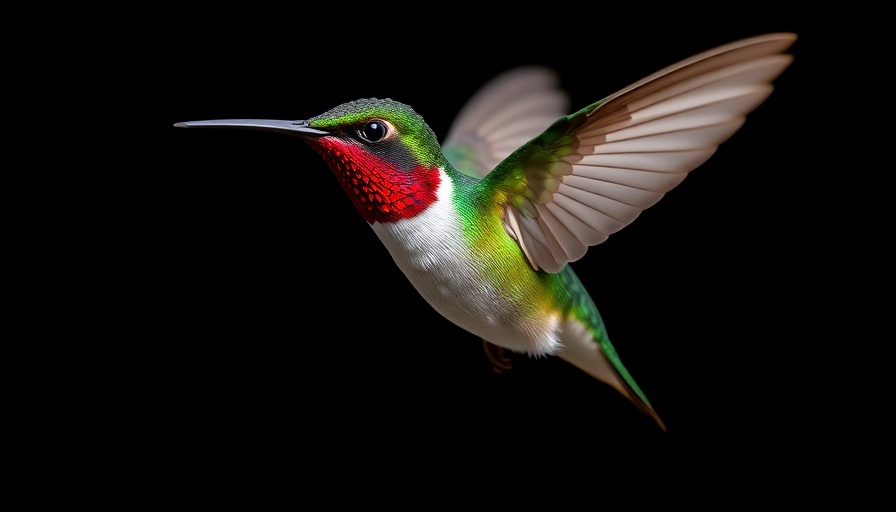
Ruby-throated hummingbird gracefully hovers, vivid plumage showcased.

Discovering the Ruby-throated Hummingbird: An Eastern Gem

Spring brings with it the vibrant presence of the Ruby-throated Hummingbird, a tiny marvel and the only hummingbird species known to nest in the Eastern United States. As winter wanes, these remarkable birds migrate from Central America, with some males arriving as early as March to claim their territories. By late April, they grace Northeastern gardens with their acrobatic displays and iridescent plumage, enchanting those lucky enough to catch a glimpse.

Springtime Migration: A Journey of Resilience

The return of the Ruby-throated Hummingbird signifies more than just a seasonal change; it represents resilience and adaptability. After a long migration, these birds perform elaborate aerial dances to attract females, showcasing their strength and agility. Their ability to adapt and thrive amidst changing environments demonstrates the challenges faced by migratory birds globally, raising awareness about their ecological importance.

Attracting Hummingbirds: A Colorful Yard Awaits

If you're eager to enjoy the company of Ruby-throated Hummingbirds, setting up a feeder is an excellent way to invite them into your garden. Hummingbirds are particularly drawn to bright colors, especially red. Consider wearing a red hat as you sit outside or painting your bird feeder in vibrant hues. Additionally, planting scarlet flowers will create a welcoming environment that enhances your backyard's biodiversity.

Right Timing: When to Look Out for These Fascinating Birds

Knowing when to expect Ruby-throated Hummingbirds in your area is crucial for birdwatching enthusiasts. Males typically lead the charge, arriving and staking their spots first, followed by females a few weeks later. By being mindful of their arrival times, nature lovers can maximize their chances of witnessing these remarkable birds as they flit between flowers and feeders, making every spring a celebration of life’s renewal.

The Joy of Birdwatching: Connection to Nature

Watching Ruby-throated Hummingbirds can be an exhilarating experience, fostering a deeper connection to nature. These birds are not just a springtime attraction; they serve as vital pollinators for many plants. Engaging with them through birdwatching can ignite a passion for conservation and the importance of protecting their habitats.

So, as the weather warms and these dazzling creatures return to our gardens, let’s cherish each moment of their visit. Prepare your feeders, sit back, and enjoy the ballet of nature right outside your window.

Avian Lifesavers

2 Views

0 Comments

Write A Comment

*
*
Related Posts All Posts
01.16.2026

Discovering the Fascinating Synchronized Swimming of Razorbills

Update Understanding the Razorbill's Social Swimming Behaviors The Razorbill, a striking black seabird closely related to puffins, demonstrates fascinating behavioral patterns that highlight their social nature. These birds are known to nest in colonies along the rocky cliffs of Iceland, creating a vibrant interplay of life. Before laying eggs, Razorbills engage in remarkable synchronized swimming behaviors that not only serve an ecological purpose but also enhance their social bonds. The Art of Coordination in Nature As the season for breeding approaches, Razorbills partake in intricate swimming displays. One of the behaviors includes swimming in a tight formation, circling above the ocean before diving simultaneously. This not only showcases their physical prowess but also reinforces group cohesion essential for hunting. The synchronized surfacing—where all birds emerge with aligned heads and open bills—creates a visually stunning spectacle that is as impressive as it is functional. Insights from Behavior: More Than Just Swimming Alongside their tight circular formations, Razorbills also exhibit a zig-zag swimming pattern, displaying a remarkable ability to navigate in unison across the water's surface. These behaviors are not merely for show; they act as critical survival tactics. By moving together, Razorbills can confuse potential predators and efficiently hunt for fish, which are often their primary food source. Such synchronized movements underscore a deeper understanding of community and teamwork in wildlife. The Significance of Synchronized Behaviors For bird enthusiasts and researchers alike, the Razorbill's communal activities shed light on avian social structures. Pairs often mate for life, which adds another layer to their communal identity. These swimming displays have implications for survival, as many species rely on teamwork to thrive in their environments. Observing these behaviors offers a glimpse into the complexities of animal relationships and the adaptive strategies they employ. Understanding the swimming patterns of Razorbills gives us valuable insights into how birds communicate and cooperate within their colonies. As we continue to explore the natural world, these intriguing behaviors remind us of the intricate connections that exist in nature, serving as a compelling topic for birdwatchers and nature lovers alike.

01.15.2026

Can We Welcome Back Common Loons to Their Historic Range?

Update The Call of the Common Loon: A Cultural Echo The haunting call of the Common Loon (Gavia immer) can evoke a sense of peace and connection to nature, largely because it signifies the beauty of northern lakes. However, their presence once extended much further south into states like New England, Ohio, and California. Although these areas have historically hosted nesting loons, human activity and environmental changes have dramatically reduced their populations, leaving these majestic birds on the brink of extinction in certain regions. A New Hope for Southern Loons Historically, loons have faced a variety of challenges, including habitat loss and pollution which have made ideal nesting areas scarce. Fortunately, recent efforts show potential for reversing this trend. In New England, conservationists have begun to actively reintroduce loons to carefully selected lakes that replicate their former habitats. For instance, the Biodiversity Research Institute (BRI) has been engaged in transplanting young loons to Massachusetts, working tirelessly to restore their presence in glacial lakes where they thrived over a century ago. Conservation Success Stories: Learning from the Past As we look to reintegrate Common Loons into their historical ranges, it's essential to recognize successful models in other regions. The Minnesota Loon Restoration Project exemplifies this, wherein the state collaborates with federal agencies to protect loon habitat and promote breeding. Focusing on artificial nesting platforms and the prevention of lead toxicity in lakes, this initiative is proving effective in bolstering the species’ numbers and assisting in sustainable population growth. Community Involvement: Everyone Can Help Local communities play an indispensable role in the resurgence of the Common Loon. Individuals can aid in conservation efforts by maintaining clean shorelines, minimizing disturbances around nesting areas, and employing lead-free fishing gear. This proactive engagement ensures that loons can thrive in their habitats without risk from human interference. Looking Ahead: A Future for Loons The resurgence of Common Loons is not merely a conservation success; it symbolizes hope for broader environmental rehabilitation. As conditions improve and awareness grows, these birds could once again grace southern lakes, bringing with them the tranquility and beauty that has inspired generations. Their return reminds us of the delicate balance we hold with nature. In memory of Miriam Williams, whose passion for nature ignited the quest for loon conservation, it's worth reiterating: we all hold the power to impact the environment around us. Whether through donations to wildlife organizations or simple acts of kindness toward our local ecosystems, every effort counts.

01.14.2026

How Albatrosses Unite for Survival in a Climate Crisis Rescue Mission

Update Albatrosses: Nature's Unlikely GuardiansIn a remarkable turn of events, the black-footed albatross (Phoebastria nigripes) has become part of an inspiring rescue mission, highlighting the unique interconnectedness of nature. As their nesting sites at Midway Atoll in Hawaii face unprecedented threats from rising sea levels, these skilled seabirds are not alone in their plight. A team of dedicated scientists, led by marine ecologist Julio Hernández, is stepping in to ensure the survival of this species by fostering their cousins, the Laysan albatrosses (Phoebastria immutabilis), as surrogate parents.Crisis and Conservation: A Transpacific Rescue MissionSince 2021, Hernández and his team have been working tirelessly to establish a new colony of black-footed albatrosses on Guadalupe Island, Mexico. The situation at Midway is dire; increasing sea levels are obliterating nests and eggs, threatening the very existence of the species. Though residing over 5,000 kilometers away, these ecological efforts bring new hope. By relocating eggs from the threatened habitats and placing them in Laysan albatross nests, the conservation team is harnessing the resilience of nature to support the survival of its own.The Nurturing Bond: Parenting Across SpeciesInterestingly, when the black-footed albatross chicks hatch, they closely resemble the Laysan chicks—both sharing a similar camouflaging gray plumage that protects them from predators. As Hernández describes, once the young birds develop their distinct features after a few months, their adoptive parents have already established deep emotional bonds, caring for them as if they were their own. This nurturing relationship has successfully resulted in over 100 chicks being raised during the first four years of the program, showcasing the unexpected ways in which wildlife can adapt and thrive under challenging circumstances.A Bright Future for Seabirds: Returning HomeThe efforts on Guadalupe Island promise a brighter future—not only for the black-footed albatross but also for the Laysan albatross, which has already made a strong comeback from near extinction thanks to earlier conservation measures in the 1980s. As the young black-footed albatrosses mature and navigate the vastness of the ocean, they find their way back to Isla Guadalupe, where a future with dual populations can flourish. This transpacific effort epitomizes the committed work of conservationists and is a reminder of what can be achieved when we respect and protect the natural world.

Terms of Service

Privacy Policy

Core Modal Title

Sorry, no results found

You Might Find These Articles Interesting

T
Please Check Your Email
We Will Be Following Up Shortly
*
*
*