Add Row
Add Element
cropper
update
update
Add Element
  • Home
  • Categories
    • Healthy Hatchlings
    • Wellness Weekly
    • Avian Lifesavers
    • Vet Talks
    • Behind the Feathers
    • Rescue Roundup
    • Aviary Secrets
March 05.2025
2 Minutes Read

How Long Can Birds Go Without Food? Surprising Survival Facts Revealed!

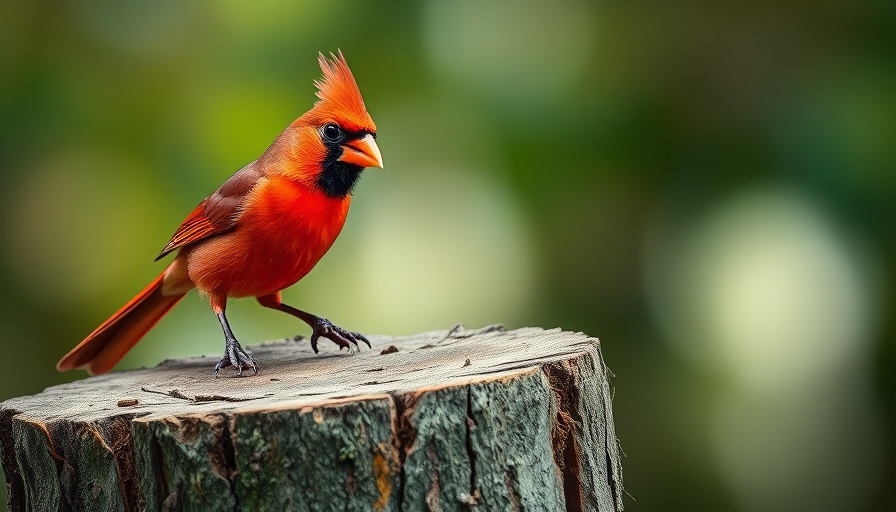
Vibrant red cardinal foraging on a tree stump in nature.

How Long Can Birds Go Without Food?

Understanding the survival strategies of birds is crucial, especially in times of environmental distress, such as harsh winters or sudden weather changes. On average, birds can last between one to three days without food, but their health deteriorates rapidly during that period. This is particularly true for small species like hummingbirds, which are highly metabolic and may only survive 3 to 5 hours without energy replenishment.

The Impact of Metabolism on Bird Survival

Birds possess incredibly swift metabolic systems. Unlike mammals who can store fat, birds tend to rely on their immediate energy supplies, making their survival highly dependent on consistent food sources. Without adequate nutrition, birds cannot sustain basic functions like flying or thermoregulation, especially as their energy demands spike in cold weather.

The Critical Role of Water for Bird Life

Equally vital to a bird’s survival is access to fresh water. Generally, most birds can only survive one to two days without hydration. In warmer temperatures, this need for water becomes even more urgent. Dehydration can lead to severe health issues, further emphasizing the importance of maintaining a balanced ecosystem for bird populations.

How Baby Birds Cope with Food Scarcity

For baby birds, the stakes are even higher. Newly hatched chicks rely heavily on regular feeding from their parents. A lack of food can quickly lead to starvation. Generally, baby birds have a very limited period—commonly up to 24 hours—where they can go without sustenance before their health declines dangerously.

Adapting to Scarcity: Survival Strategies Employed by Birds

Birds show remarkable resilience and adaptability in the face of food shortages. If a familiar food source becomes unavailable, they instinctively expand their foraging ranges or alter their diets. The adaptability showcased by birds, such as urban species like the Carib Grackle that scavenges in restaurants, illustrates their ability to change behaviors based on environmental challenges.

The Shared Responsibility: How Humans Can Help

To support avian survival, especially during tough seasons, bird enthusiasts can take steps to ensure that local birds have access to food and water. This includes correctly managing feeders during the winter months and planting native species that provide food and shelter year-round.

Understanding the complexities of bird survival in the wild is not just fascinating but essential. By taking appropriate actions, we can help ensure that these beautiful creatures navigate the challenges before them effectively.

Wellness Weekly

4 Views

0 Comments

Write A Comment

*
*
Related Posts All Posts
01.15.2026

The Euthanization of a Rare Himalayan Vulture in Kranji: A Wake-up Call for Conservation

Update Tragic Loss: Rare Himalayan Vulture in Singapore's KranjiA rare Himalayan vulture, recently discovered gravely ill in Kranji, was sadly euthanized after its health declined further despite treatment efforts. Rescued by the National Parks Board (NParks) on January 3, the vulture, native to northern India, was transferred to the Mandai Wildlife Group where it faced a tough battle for survival.Upon examination, the bird was found to be severely underweight, infested with parasites, and suffering from anaemia and muscle injuries. The dedicated veterinary team worked tirelessly to rehabilitate the animal, yet the vulture's condition continued to deteriorate, leading to the heartbreaking decision to end its suffering on January 7.A Contribution to Scientific KnowledgePost-mortem examinations revealed important insights into the health issues afflicting the vulture, and its carcass was subsequently donated to the Lee Kong Chian Natural History Museum for studies and educational purposes. This serves as an essential contribution to Singapore's growing collection of rare animal specimens, with Dr. Tan Yen Yi highlighting its significance as the first specimen of the Himalayan vulture in both the museum and Singapore.Increasing Sightings: A Cause for ConcernInterestingly, the Mandai Wildlife Group reports a rise in Himalayan vulture sightings across Singapore. Experts suggest that younger vultures may stray from their typical habitats while searching for food, often leading them to urban areas with weakened ecosystems. This highlights the delicate balance wildlife must navigate, as habitat loss continues to threaten these magnificent creatures.Another notable rescue took place on January 11, when another Himalayan vulture was found along the East Coast Parkway, also dehydrated and weak from exhaustion. Such incidents underline the urgency of addressing habitat destruction and the survival of these species.Preserving Our Natural HeritageThe unfortunate fate of the Himalayan vulture raises critical questions about conservation efforts in urbanized landscapes. Continued urban expansion poses challenges to wildlife survival. Educating the public about the importance of biodiversity, and the need for protective measures is essential for preventing similar incidents and ensuring the sustainability of local ecosystems.As a society, we must support initiatives aimed at preserving these fascinating birds and their habitats. By understanding the struggles these creatures face, we can work together to make meaningful changes that benefit our unique wildlife.

01.14.2026

Can the Orioles Avoid Injuries in 2026? Insights and Strategies

Update The Pressures of Past Injuries: A Hard Lesson for the Orioles The Baltimore Orioles experienced a tumultuous 2025 season marked by injuries that severely hampered their performance. As we approach 2026, the franchise bears the scars of a challenging year where more than two dozen players found themselves on the injured list at some point. With key figures in the lineup such as Gunnar Henderson and Adley Rutschman suffering multiple injuries, the Orioles’ dream of a competitive season quickly turned into a nightmare. The need for a robust strategy to combat health issues has never been more crucial for the team moving forward. Building a Stronger Team: The Role of New Acquisitions One of the glimmers of hope for the Orioles in 2026 rests on the shoulders of new acquisitions. Notably, first baseman Pete Alonso, who boasted good health with the Mets, played all 162 games in each of the last two seasons. The addition of Taylor Ward, another durable asset, also raises the potential for a fortified roster that can withstand the strains of a grueling season. This new infusion of talent might just be what the team needs to turn their fortunes around but hinges significantly on their ability to stay on the field collectively. The Road to Recovery: Insights from Medical Experts As the saying goes, prevention is better than cure. For the Orioles, addressing the underlying health concerns starts with their athletic training staff. Scott Barringer, entering his second year as the team's athletic trainer, has to devise and implement innovative conditioning programs that will help minimize injury risks. Insights from the medical community underscore that proactive strengthening and injury prevention routines are vital, especially for players who have shown chronic health issues in the past. Ensuring that athletes are in the best condition before the season starts could prevent a repeat of last year's injury woes. Could 2026 Be the Year of Rehabilitation? The silver lining in the Orioles’ situation is the potential for a significant bounce-back season. With injuries managed better and new talent added, fans are cautiously optimistic. Historical records show that teams often recover from dismal seasons, particularly when promising players reclaim their fitness and form. For Baltimore, the door to a hopeful 2026 remains wide open, but it’s vital that their strategy does not solely rely on luck this time around. Community Engagement: The Orioles and Their Fans The heartbeat of any sports team lies within its community. The Orioles understand that for them to thrive, they need the unwavering support of their fanbase. This engagement helps foster an atmosphere of resilience through the tough seasons. As the team gears up for 2026, fans are encouraged to participate actively in discussions and activities surrounding the Orioles, reinforcing a shared commitment to a new, healthier chapter. Ultimately, the quest for improved health in 2026 is not simply about avoiding injuries; it's also about building a stronger team culture, fostering community ties, and embracing the challenges that come with the sport. As the anticipation builds for spring training, the Orioles' focus will rightly be on health, cohesion, and determination.

01.10.2026

Bird Flu Viruses: The Emerging Risk of H9N2 and Its Pandemic Potential

Update Understanding the Rising Threat of Bird Flu VariantsThe recent uptick in avian influenza cases, particularly strains like H9N2, raises critical concerns for public health officials globally, and for good reason. Historically, bird flu, primarily H5N1, has ravaged poultry industries and even jumped to humans, causing severe illnesses and deaths. However, scientists are increasingly wary of H9N2 as a potential future pandemic risk. This strain, while often overlooked due to its milder impact on avian populations, has shown adaptability that could pose a serious threat to human health.The Underreported Cases of H9N2As highlighted by experts, including Dr. Kelvin To from Hong Kong, over the past decade, H9N2 has mutated, acquiring features that enhance its ability to infect human cells. In 2025 alone, China reported over 29 human cases up from just 11 in 2024, indicating a worrying trend. Yet, many cases may go unreported or misdiagnosed due to the virus often causing mild symptoms. This underreporting complicates risk assessment and preparedness strategies.Comparing H5N1 and H9N2: Two Faces of Bird FluWhile H5N1 warrants intensive monitoring due to its high mortality rate, H9N2's lower pathogenicity can obscure its potential danger. Researchers argue that increased surveillance is vital, especially since humans typically show mild reactions to H9N2 infections. The question remains: how many more cases could emerge if healthcare systems do not catch these infections in time? Enhanced diagnostic efforts and public awareness about H9N2 could be the key to preventing future outbreaks.What Lies Ahead: Potential Pandemic RisksLooking to the future, the genetic mutations in H9N2 show signs of adaptation for easier human transmission. Although there’s no evidence of sustained human-to-human spread yet, experts warn that scenarios where H9N2 mixes with other viruses could rapidly change this. The genetic reassortment in animals, particularly in birds and mammals, raises alarms about new viral strains capable of sustained human transmission.Taking Proactive Steps: Importance of VigilanceIn light of these findings, increased global surveillance efforts are critical. Both animal and human health professionals are urged to monitor avian flu cases closely, especially in regions with reported human infections. Collaboration across borders and disciplines will enhance our ability to track outbreaks early and stem potential health crises. Only through vigilant efforts can we better prepare for an uncertain future with avian influenza variants.

Terms of Service

Privacy Policy

Core Modal Title

Sorry, no results found

You Might Find These Articles Interesting

T
Please Check Your Email
We Will Be Following Up Shortly
*
*
*